I have exhausted all my blog ideas, so for my final blog I want to reflect on blogs and their effectiveness as a medium. As my blogs have shown, there are endless forms of media in the world. These range from a simple text message to a hand written letter. What I have come to realize is that the most time consuming medium is typically the most effective at getting your point across. You don't send a text message to the person you just interviewed with for a reason- it shows no effort. However, sending them a hand written thank you letter is very impressive and shows that you really took the time to thank them. To that point, I wonder how effective blogs truly are. So many blogs are poorly and quickly written and hold no value. This dilutes the blogs that actually are thoughtful and well planned. Therefore, I believe that going forward the most effective mediums will always be newspapers and magazines, as they display significant effort. Anyone can make a blog online and publish a few posts, but it takes someone with skill and effort to publish in print. Although I read dozens, if not hundreds, of my peers blogs throughout this semester, I'm not sure if I remember any (except of course the infamous blog by Cemra/her cousin). This goes to show the ineffectiveness of blogs as a medium.
If I were to make recommendations on the blogs, I would suggest having the blogs be about a different topic/argument each week. I got sick of reading blogs about how much people love their cell phones and Facebook. I liked when students would make a bold claim and then others would attempt to dispute it. That is when the blogs were most effective. Therefore, it would have been interesting to see the debates that would have ensued if the professor made a statement each week and had students use their blog to argue for or against that statement.
Stay Classy Babson
Saturday, November 20, 2010

Sunday, November 14, 2010
Cars as a Medium
More often than not, the car one chooses to drive says a lot about that person. This is something we've all noticed at one point or time; whether it be driving behind the Buick doing 45 in a 65, or the heavily tinted Honda Civic swerving in and out of traffic. I believe that we all choose our cars accordingly- as to how it fits our personality. To make this claim, I am relying on many generalizations. I agree that they are up to debate, but that is why it is merely my opinion.
To illustrate my point, I'll show a picture of a car and their typical driver.

Toyota Corolla. The epitome of bland. Drivers of these cars are typically very average people with average lives. There is absolutely nothing special, or interesting, about drivers of a Toyota Corolla. They have come to terms with their ordinary life and embrace it completely.
 Mercury Grand Marquis. The median age of those who drive a Grand Marquis is 107, and I am not kidding. I run red lights and drive through stop signs when I see the possibility of getting stuck behind one of these.
 A minivan. The make or model is irrelevant, because they are all as equally hideous. Drivers are typically 40 year old soccer moms with one or two children, yet find it necessary to purchase a vehicle with seating for 8.
 Late model Honda civic, typically with an unfinished paint job and 20" rims. Drivers of this vehicle firmly believe they are driving a car much faster than they actually are driving. Although they are not skilled at driving cars with manual transmissions, they insist on revving their engines at every stoplight to initiate a drag race with the Camry next to them.
The drivers of these vehicles think about the stereotypes associated with them before purchasing. While purchasing the vehicle, they are in a sense agreeing to be associated with these stereotypes. For example, a humble middle-aged man will typically choose to purchase a new Toyota Rav4 over the used Cadillac Escalade. The Escalade may provide superior comfort; however, it does not correctly represent the lifestyle of the average family man.
In this sense, the cars we chose to drive are a medium for ourselves. We are communicating to others, through our automobiles, about our personalities and the way in which we live our lives.
To illustrate my point, I'll show a picture of a car and their typical driver.

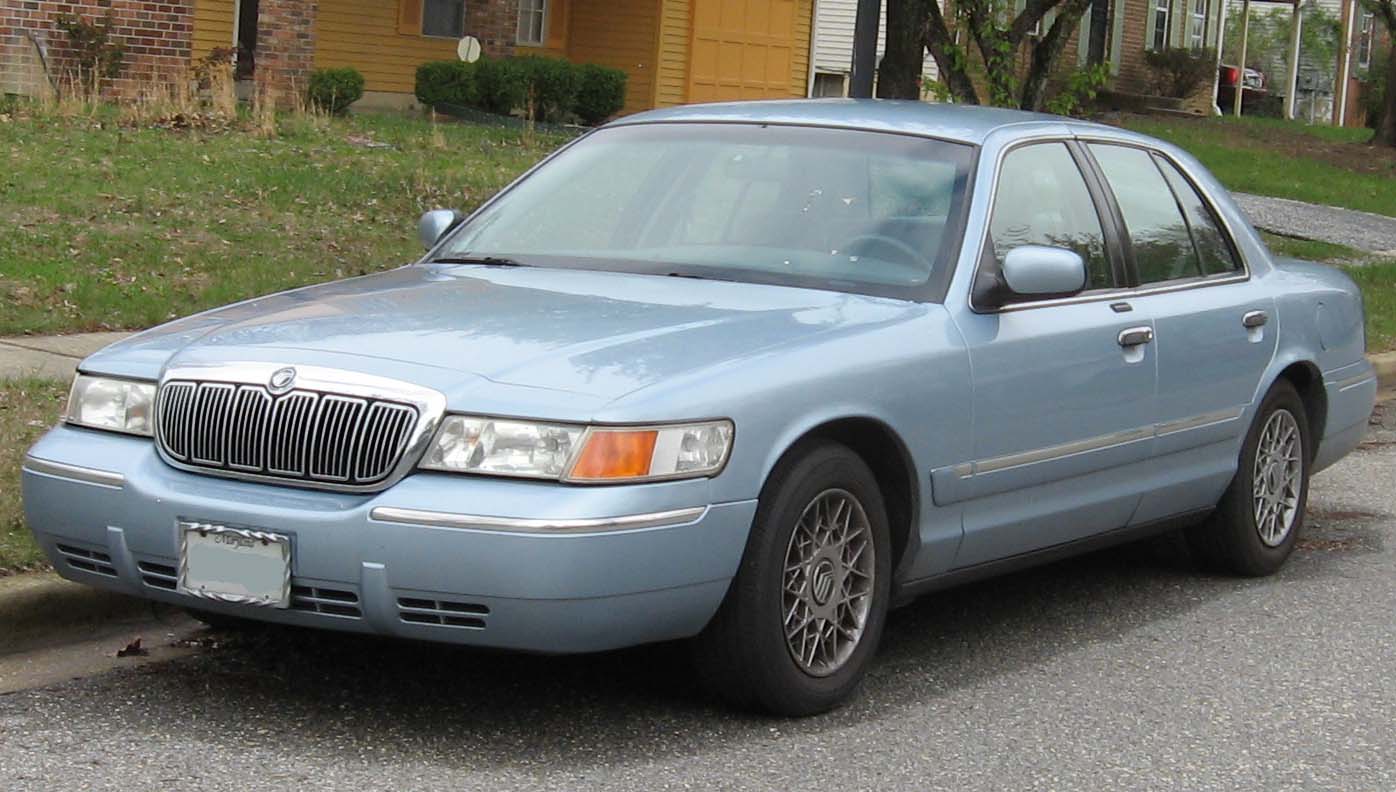


The drivers of these vehicles think about the stereotypes associated with them before purchasing. While purchasing the vehicle, they are in a sense agreeing to be associated with these stereotypes. For example, a humble middle-aged man will typically choose to purchase a new Toyota Rav4 over the used Cadillac Escalade. The Escalade may provide superior comfort; however, it does not correctly represent the lifestyle of the average family man.
In this sense, the cars we chose to drive are a medium for ourselves. We are communicating to others, through our automobiles, about our personalities and the way in which we live our lives.
Sunday, November 7, 2010
Drinking For A Cause
A good friend of mine is very shy, especially around the ladies. That is, until he gets liquor in his system. Once the social lubricant enters his bloodstream he turns into another man and begins talking to every woman he sees. More often than not this ends poorly; however, I commend him for his efforts. This past weekend we were in the presence of the opposite sex and my friend was completely sober. While his chances of impressing a woman drunk are slim, they are nonexistent when he is sober. Therefore, I instructed my friend to drink as much as possible, as fast as possible, so he could muster the nerve to speak to this beauty. This plan worked to perfection, as 5 Miller's later he was conversing with this woman. Knowing he had a chance to begin a "relationship" with this woman, he monitored his alcohol intake so he didn't cross the threshold of "comically buzzed" to "belligerently incoherent." This plan worked to perfection and by the end of the night he landed her phone number and even got a hug. Knowing when to commence, as well as discontinue your drinking is key in situations such as these.

In this real life scenario, alcohol was the medium for my friend. Without the presence of Mr. Miller Lite, he never would have communicated with that woman. Therefore, alcohol acted as the medium and relayed a message between a sender and a recipient.
To some, this may seem to be a reach and may even sound crazy. However, this media studies class has really opened my mind as to the endless number of mediums that exist. Alcohol itself may not always act as a medium; however, when it is the difference maker between no communication and communication, it certainly is fulfilling the requirements of being a medium. This is what makes alcohol so popular. Many conversations, relationships, and memorable nights would never take place if it wasn't for alcohol acting as the medium. Certainly, this isn't always a good thing as alcohol also initiates many unwanted and violent conversations. When drank properly and in moderation, alcohol has the ability to serve as a much needed social lubricant.
Sunday, October 31, 2010
Caller ID
While phones have been around for decades, it is easy to forget that the implementation of caller id is a relatively new phenomena. I remember when none of the phone in my house had caller ID and a separate attachment was required in order for caller ID. Now, every phone available has caller ID and every voice plan includes caller ID at no additional charge. What got me thinking about caller ID was an interaction I had just the other day with a friend. His phone was ringing and after looking at the screen, he pressed ignore and put the phone back in his pocket. When I asked him why he didn't answer the call he said because he didn't recognize the number. This made me wonder if he would ever answer the phone if he didn't have caller ID. Having caller ID allows us to quickly prepare for a conversation and adjust our tone and mood accordingly.
Caller ID is certainly an example of a medium that has brought social change. When someone is calling me that I don't want to speak with, I don't have to speak to them as I can press the ignore button and let it go to voice mail. Before caller ID, I would have to answer the phone and be forced to have a conversation with someone whom I did not want to speak with. Secretaries no longer have to screen calls as caller ID does this same thing.
But is this social change good? Is it good that we can so easily decline a conversation from someone? While caller ID is definitely convenient, it also prevents necessary interactions. One can avoid calls for weeks at a time with the aid of caller ID. There's no spontaneity in conversations nowadays, as very few people interact with strangers for companionship. On the train everyone sits in silence and looks at their cell phone, when 50 years ago everyone would have been making conversation. Similarly, caller ID is just one more innovation that leads us to be anti-social, as it takes the surprise out of every conversation.
Caller ID is certainly an example of a medium that has brought social change. When someone is calling me that I don't want to speak with, I don't have to speak to them as I can press the ignore button and let it go to voice mail. Before caller ID, I would have to answer the phone and be forced to have a conversation with someone whom I did not want to speak with. Secretaries no longer have to screen calls as caller ID does this same thing.
But is this social change good? Is it good that we can so easily decline a conversation from someone? While caller ID is definitely convenient, it also prevents necessary interactions. One can avoid calls for weeks at a time with the aid of caller ID. There's no spontaneity in conversations nowadays, as very few people interact with strangers for companionship. On the train everyone sits in silence and looks at their cell phone, when 50 years ago everyone would have been making conversation. Similarly, caller ID is just one more innovation that leads us to be anti-social, as it takes the surprise out of every conversation.
Sunday, October 24, 2010
Playing Us Like Puppets
I couldn't help but laugh the other day when viewing the top stories on Yahoo.com the other day. Yahoo! has a slideshow feature on their front page that shows four top stories at a time, and users can cycle through the stories four at a time. Of the four main stories on their homepage, two were about sports and the other two were about celebrities. Not until the 7th or 8th series of top stories were relevant issues like politics or the economy discussed. I found it amusing that "Celebrities' hair makeovers" was considered more of a top story to Yahoo! than "Iran restricts studies."
 This got me thinking about the section in chapter four about how editors must decide which stories to feature on the front page. According to the text, "The front page identifies the editors' selection of the of the most important events of the day, influences which stories will be the most visible, and provides a key measure of success for reports . . ." Using this logic, if I wanted to be a successful reporter, I could simply journal the hair styling of Miley Cyrus and be on the front page everyday. Editors continue to load websites and newspapers with junk, which only influences other writers and journalists to produce more junk.
There is a huge influence that these articles have on the public. By seeing these pop-culture related articles on the front page everyday, people are influenced to take an interest in pop-culture. This in turn leads people to discussion on pop-culture, and away from discussion on issues that actually matter. I title my post "Playing Us Like Puppets" because I believe this is exactly what editors want. Editors do not want readers to be reminded of poverty and murder when they read their content, so they choose to include other content with little meaning. This is also beneficial to advertisers who pay to advertise with the content producers, as their advertisements are not being displayed on the same pages as crime scenes. The more we see pop-culture in the media, the more we are lead to believe that these "celebrities" are relevant. If editors chose to display the current events of Congress on front pages, than discussions amongst the public would be more informed and of greater intellect.

There is a huge influence that these articles have on the public. By seeing these pop-culture related articles on the front page everyday, people are influenced to take an interest in pop-culture. This in turn leads people to discussion on pop-culture, and away from discussion on issues that actually matter. I title my post "Playing Us Like Puppets" because I believe this is exactly what editors want. Editors do not want readers to be reminded of poverty and murder when they read their content, so they choose to include other content with little meaning. This is also beneficial to advertisers who pay to advertise with the content producers, as their advertisements are not being displayed on the same pages as crime scenes. The more we see pop-culture in the media, the more we are lead to believe that these "celebrities" are relevant. If editors chose to display the current events of Congress on front pages, than discussions amongst the public would be more informed and of greater intellect.
Sunday, October 17, 2010
Tabloid Taboo
Walking by the stores in the airport, I couldn't help but notice how many people were purchasing tabloid magazines to read on their flight. Aside from the tabloids though, there wasn't much else for customers to purchase. Of the dozen or so magazines typically offered, over half are magazines the likes of People, The Enquirer, Star, etc. This led me to wonder what fuels the desire for tabloids. Given the incredible boom of the tabloid media, I wonder if their popularity is reflective of the desires of the public, or if tabloids are just jammed down our throat.
 Do people really want to read about Brad Pitt's facial hair or Paris Hilton's latest arrest? Are we as a society that uneducated that we must read such petty drivel?
I believe that, for the most part, people read tabloids to escape the harsh realities of the real world. Reading a real magazine, such as TIME, provides readers with news of current events that matter. However, they are mostly depressing and do nothing but remind the reader of the cruelties in the world today.The worst thing one can read about in the tabloids is that Spencer Pratt shaved his beard, or Angelina and Brad got in a fight. In TIME magazine, the articles describe war zones and impoverished countries. People do not want to be reminded of how fortunate they are to have drinking water or a roof over their head. This is why I don't watch the news at night- there is nothing positive about it. Magazines generally do not write articles about how great of a job the President is doing or how well the economy is progressing. Everything in the news revolves around negativity and pessimism.
Similarly, tabloids focus on pessimism, but in a different way. Rather than focusing on the negative things that matter, such as our national deficit and unemployment rate, tabloids focus on the shortcomings and failures of individual people who are already successful and set for life. Reading about Lindsay Lohan's recent drug bust makes people feel better about who they are and where they are in their life. Contrastingly, reading about starving children in Africa only makes people feel worthless and guilty for not contributing enough. This is why I believe people love tabloids and their popularity is a reflection of the desires of society.

I believe that, for the most part, people read tabloids to escape the harsh realities of the real world. Reading a real magazine, such as TIME, provides readers with news of current events that matter. However, they are mostly depressing and do nothing but remind the reader of the cruelties in the world today.The worst thing one can read about in the tabloids is that Spencer Pratt shaved his beard, or Angelina and Brad got in a fight. In TIME magazine, the articles describe war zones and impoverished countries. People do not want to be reminded of how fortunate they are to have drinking water or a roof over their head. This is why I don't watch the news at night- there is nothing positive about it. Magazines generally do not write articles about how great of a job the President is doing or how well the economy is progressing. Everything in the news revolves around negativity and pessimism.
Similarly, tabloids focus on pessimism, but in a different way. Rather than focusing on the negative things that matter, such as our national deficit and unemployment rate, tabloids focus on the shortcomings and failures of individual people who are already successful and set for life. Reading about Lindsay Lohan's recent drug bust makes people feel better about who they are and where they are in their life. Contrastingly, reading about starving children in Africa only makes people feel worthless and guilty for not contributing enough. This is why I believe people love tabloids and their popularity is a reflection of the desires of society.
Friday, October 8, 2010
Exploitation
This week in class we discussed Bradley's recent blog in which he defended the exploitation of women in advertisements and it got me thinking about a few things.
First, what do we mean by exploiting? I looked up the word exploit on merriam-webster.com and the definitions it gave me were as follows:
1. to make productive use of : utilize <exploiting your talents> <exploit your opponent's weakness>

First, what do we mean by exploiting? I looked up the word exploit on merriam-webster.com and the definitions it gave me were as follows:
1. to make productive use of : utilize <exploiting your talents> <exploit your opponent's weakness>
2
: to make use of meanly or unfairly for one's own advantage<exploiting migrant farm workers>
This provides an extremely broad view of exploitation as one may view it positively or negatively. A model posing in her underwear to sell a product may be looked at in multiple ways. One may believe she is the one exploiting, as she is using her body to make money and start/continue her career. Contrastingly, others may believe she is the one being exploited, as a company is using her body to sell their product. Regardless, why is it an issue? If the model is profiting from the pay she is receiving, and the company is profiting from the revenue the advertisement produces, then who loses? For those that wish to counter with "the public loses because these advertisements create a negative stereotype and lead to eating disorders," you're wrong. People WANT to see skinny beautiful models in advertisements. If people didn't want this, they would stop buying products from companies that use this type of advertisement. And I don't see Victoria's Secret going out of business anytime soon...
Additionally, men are exploited just as much as women are. Michael Jordan is exploited by Nike who makes billions of dollars off the Jordan brand. Nike never mentions Jordan's philanthropy work, they just mention how good he was at basketball. And do you think Michael Jordan cares? Absolutely not- he's laughing all the way to the bank. Just like those models who get paid tons of money to take their clothes off. Whether you want to call it exploitation or not, they call it making money.

Saturday, October 2, 2010
Hold Your Criticism
Reading through the blogs of my fellow classmates, I have noticed a fairly consistent theme: they all talk negatively of media. Many of the blogs speak negatively about the relationship between media and stereotypes, citing media as the number one source of stereotype generation. Other blogs speak of the addiction many have to particular mediums, with one even going so far as to comparing a Facebook addiction to a heroin addiction. While I may share some of these beliefs, I do believe that media also has many positive aspects to it. Even aside from the communication of news, which most media do, there are other uses of media that serve a functional and positive role in society.
My first example is the amber alert system. The amber alert system is a child abduction alert bulletin that alerts people through numerous mediums when a child is abducted. Descriptions of the child, as well as the suspected abductor and their vehicle, are sent via email and text message to those subscribed to receive alerts. Additionally, the descriptions can be seen on electronic traffic signs and on billboards of participating companies. This revolutionary system has already saved lives, and proves just how valuable media are in our society.

Another example are wanted posters posted by the FBI. The US Government uses media in a very smart manner, as they post pictures of wanted criminals in public places with information about the criminal as well as the monetary reward for their capture. The FBI even goes a step further and airs a popular show, America's Most Wanted, to help capture criminals. As of September 4, 2010, 1,128 criminals have been arrested because of this television show (Wikipedia).

In light of the Virginia Tech Massacre, where a gunman opened fire on a college campus and killed 32 innocent civilians, colleges around the world are deploying a campus alert system to warn students of potential danger immediately. The primary way campuses are able to do so is through text message. A text message can be sent and received in a matter of seconds, giving students valuable time to find safety and avoid danger. Babson has an alert system, and it is just one of many ways that media are savings lives and protecting the public.
Saturday, September 25, 2010
Madden Madness
The popular video game Madden has been a part of my life for nearly 10 years. I can remember coming home from school in middle school and playing on my father's computer until it was time to go to bed. Now, I play on my Playstation 3 every night before going to sleep and even in between classes. For those unaware, Madden is an American Football video game named after the famous coach and announcer John Madden. I am definitely not alone in my addiction to Madden, as it is one of the best selling games of all time. There is even a television show on ESPN devoted to airing Madden tournaments around the country.
 Typically, I play a game every night with a friend of mine who lives down the hall from me. The games get extremely competitive and usually result in one of us throwing our controller and yelling expletives. We even discuss the results of the game the next day, rehashing the best moments. Often, we have been reminded by others that we do not actually play the game, even though we discuss the game as if we do. The medium Madden has become an actual sport to us, in lieu of actually playing football outside. While decades ago children would play football oustide for entertainment, I find myself sitting in front of a television for hours on end simulating a football game with a computer.
Madden may be wildly successful and popular; however, the argument can be made that it negatively affects our youth. As a substitute to real physical exercise and social interaction, many decide to instead sit on a couch and compete in a fictitious football game against a computer. While I have never let a video game dictate my life, it is important that I budget my time appropriately so I can enjoy playing Madden while still maintaining a healthy balance of school work and social interaction. This is vital to anyone that takes as much enjoyment out of a video game as I do in Madden, as it is easy to become so addicted that other areas in your life suffer.

Madden may be wildly successful and popular; however, the argument can be made that it negatively affects our youth. As a substitute to real physical exercise and social interaction, many decide to instead sit on a couch and compete in a fictitious football game against a computer. While I have never let a video game dictate my life, it is important that I budget my time appropriately so I can enjoy playing Madden while still maintaining a healthy balance of school work and social interaction. This is vital to anyone that takes as much enjoyment out of a video game as I do in Madden, as it is easy to become so addicted that other areas in your life suffer.
Saturday, September 18, 2010
2nd Blog Entry: iPhone Addiction
When selecting an artifact that demonstrates my own experience with the dominant media of our society, I decided to think of my typical daily routine in order to decide which medium has the most cultural significance in my life. Upon doing so, I quickly realized that my iPhone plays a dominant role in nearly all aspects of my life. After being woken by the alarm feature on my phone, I quickly check the weather, scores from the previous nights baseball games, and local news all from my phone. Throughout the day I send and receive event reminders, text messages, and emails from the same device. Sometimes I even trade stock from my phone in the middle of the day. At night, I plug headphones into my phone and listen to music while I visit the gym. As you can clearly see, I rely on my phone for a variety of functions.
Thinking back to the reading, Chapter One specifically, my understanding of the world around me would be completely different without my cell phone. If I were to go without my cell phone, I would be forced to find different methods of communication, such as written and spoken (methods I admittedly do not use enough). Additionally, my source of information from the world around me would be gone and I would have to seek alternative methods of gaining this information. The cultural significance of my iPhone is colossal, as the phone constitutes so many intellectual manifestations. My extensive daily use of the device proves how vital it is to keeping me in sync with the rest of the world. It would be very hard for me to function without a form of communication or news of the outside world, and my iPhone is what I primarily use for both. It is almost scary for me to think of my reliance on my phone and how hard my life would be without it. The culture that my cell phone has given me is one of instant communication and gratification. I am so used to receiving news instantly that if I ever had to rely on written mail through the Post Office, I would go crazy due to impatience. As a society we are progressing further with mass media almost daily, and I am not alone in my reliance on instant gratification.
Define Media
When proposing my own definition of media, I started by making a list of all devices and objects that I assume to be mediums. This list included televisions, cell phones, magazines, and computers, among others. Aside from being told by society for years that these items constituted media, I deliberated over the shared qualities of these products that give them the ability to be defined as a medium. Upon doing so, I realized that media goes far beyond sight and sound, and into the communicative ability of an object. Every item on my list that I believed to be a medium had the ability, in one way or another, to communicate with the user through the use of technology. Cell phones relay conversations, televisions and magazines transmit entertainment and advertisement, and computers allow for numerous methods of communication. Just as Dr. David Croteau and Williams Hoynes proposed in Media Society, I initially believed media to be “the different technological processes that facilitate between (and are in the ‘middle’ of) the sender of a message and the receiver of that message” (6-7). Scanning through my list, I realized that every object I believed to be a medium either used power or was prepared by a computer before being printed. For reasons I will address, my initial shared belief with Croteau and Hoynes that media are “technological processes” no longer made sense to me.
By defining a medium as a technological process, one is also proposing the notion that mediums did not exist before electricity and the printing press. This misconception is common, as even I initially believed technology was essential to the definition of a medium. However, when we think about other forms of communication, such as cave drawings and hand gestures, communication through non-technological mediums is blatantly possible. Media has advanced exponentially in the past few decades and is now more prevalent than ever before. Having been raised in a society where technological media is relied upon for all forms of communication and entertainment, it is easy to forget that mediums do exist that are void of technology. As Croteau and Hoynes write, “our everyday lives are saturated by radio, television, newspapers, books, the Internet, movies, recorded music, magazines…” (3). While these mediums certainly surround us today, none are more frequent and widespread than ordinary conversation. Any form of communication, from speech to written, can be deemed a medium as it allows for messages to be transferred between two or more parties. This definition may appear to be obvious enough; however, the recent rise in popularity of “social media” has given many a blurred definition of media. The addition of the word “social” before media leads many to believe that media itself does not already include a social aspect. This could not be any further from the truth, as media consists of all activities that can be classified as social.
Popular forms of media, such as Facebook and Twitter, have given users the ability to easily interact with friends, family and colleagues. On Facebook, if one is a friend of another member they are allowed to view their status updates and uploaded pictures. This allows for an extremely convenient medium which provides users with instant gratification, as opposed to having to wait for a reply from a letter you sent in the mail. Facebook, and similar mediums, are revolutionizing the way we look at media and interact with one another. While previous generations are more likely to interact through a non-technological medium such as conversation, the current generation, who has been raised on technologically advanced mediums like Facebook, is far more likely to use technology-infused mediums. Media are numerous and vast, and everyone will have a different medium preference. The methods of doing so may change, but all mediums serve the same purpose to allow for communication between multiple users.
Subscribe to:
Posts (Atom)